South Hudson Institute of Technology was chartered in 1871 by engineers and industrialists working along the Hudson. The first class entered in 1875. Its twenty-eight students studied surveying, masonry, and steam. The terrace above the river had been graded the year before.
In 1876 Matthias Corwen, the first dean of studies, put slate boards on every classroom wall and asked that no class begin with a lecture; the college still teaches that way. The college has remained undergraduate and technical. A boathouse opened in 1904. The mule became the athletic mascot in 1906. Women were admitted with the class of 1973. Students live in four residence halls and belong to one of four houses, and faculty join them for dinner on Thursdays.
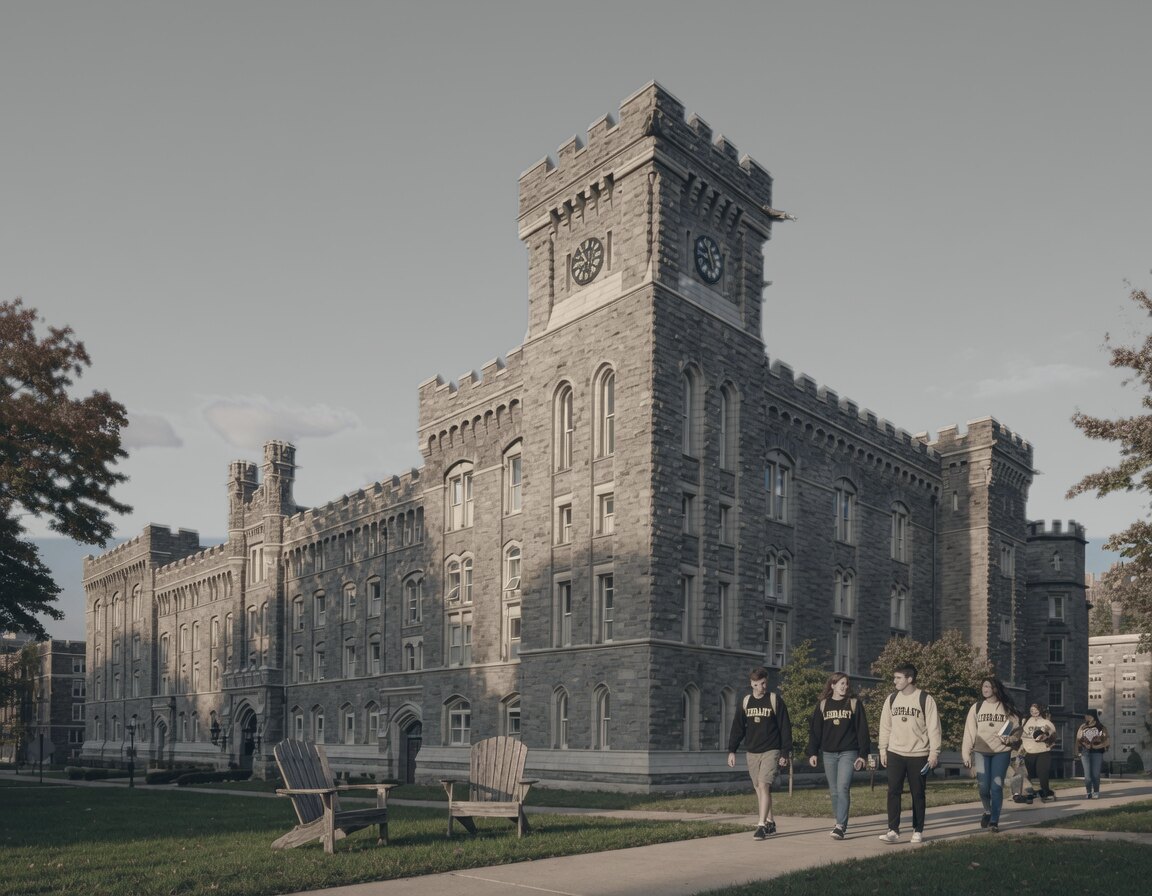
Founders Library, with its clock tower, stands at the south edge of the terrace. The laboratories are behind it, and North Dock is down the path to the water. From the library steps the Hudson is visible, and on a clear October day the far ridge is in color. The terrace bell rings the hour from seven until ten.
The motto, Scientia et Ripa — knowledge and the bank — is carved above the library door.